
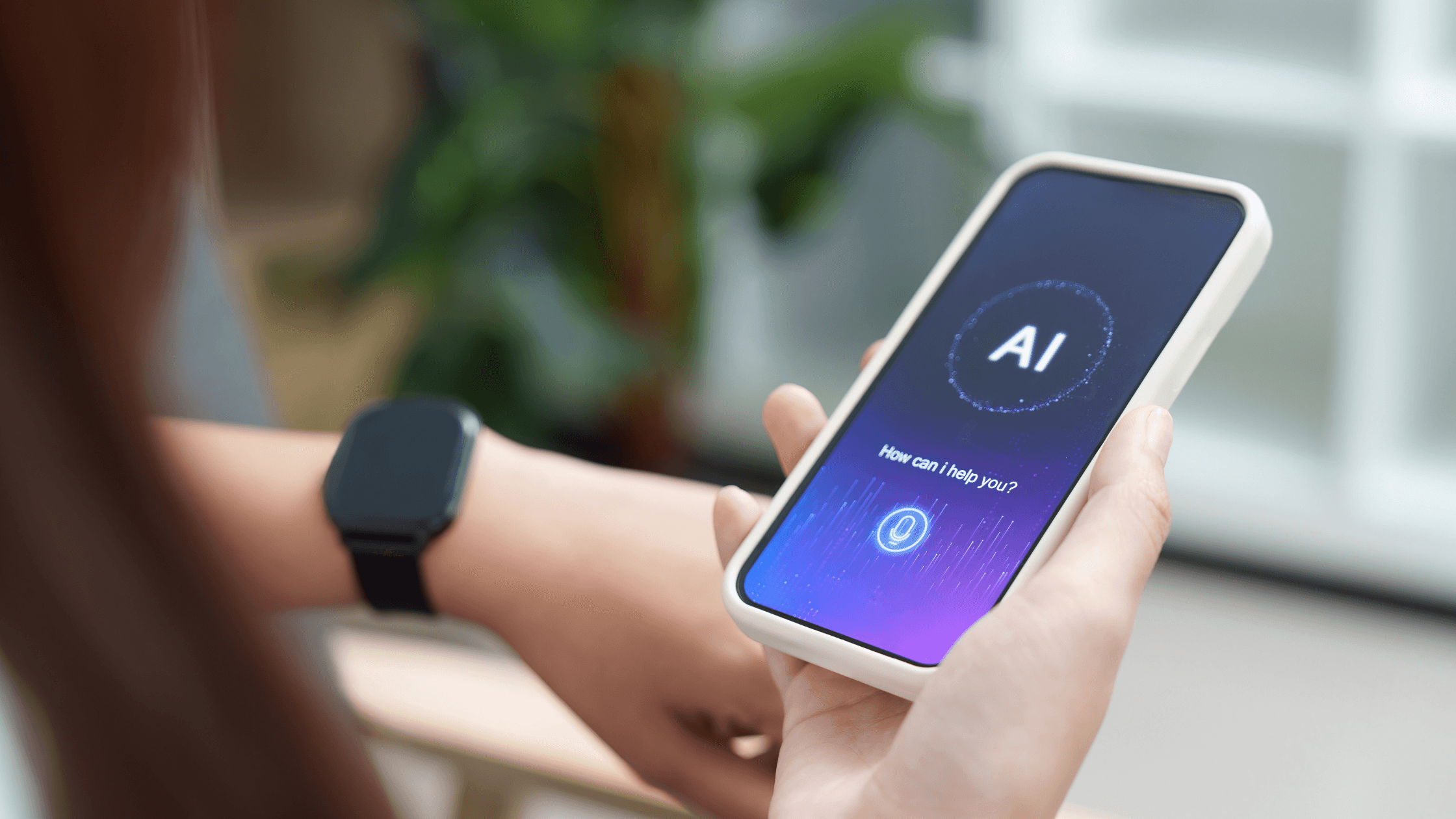
The development of all things Artificial Intelligence (AI) continues to evolve at a rapid pace. From the answering of phone calls and processing of orders to the answering of health questions, AI use is expanding daily. The latest AI rage is focused on chatbots. AI chatbots simulate human intelligence. They can help with daily tasks, answer questions, help with homework, explain ideas, and even respond to emotions in a way that feels like talking to a real person. Children are being introduced to this technology at a younger age than ever before, making parental guidelines difficult to enforce. While AI chatbots can be helpful for learning, there are growing concerns about the effects of early and frequent exposure on children’s emotional and developmental growth.
Children learn empathy, communication, and emotional skills through interactions with parents, teachers, and peers. Research shows that children use AI chatbots for emotional support and companionship, which may reduce opportunities to practice real-life social skills (Internet Matters, 2025). Because chatbots respond instantly, children may begin to rely on them instead of trusted adults or friends. Chatbots can answer almost any question, and children may encounter topics they are not emotionally ready to understand. Experts warn that AI responses can expose children to inappropriate or complex information regardless of a child’s developmental level (UNICEF, 2021). Younger children may also struggle to understand that an AI bot is not a real person. It must also be noted that chatbots have given both impractical and dangerous advice to children.
AI use can affect overall development. Elementary-age children are still learning problem-solving skills, independence, and emotional regulation. Recent research shows that while AI chatbots can support learning, they can also influence how children think, learn, and interact with others if overused (Movaghar & Thompson, 2024). In addition, pediatric experts warn that children are increasingly turning to AI for advice and emotional support, even though these tools cannot respond like a real caregiver or professional (Johns Hopkins Medicine, 2025). When children turn to AI instead of parents, teachers, or caregivers, they may miss important opportunities to build confidence and relationships. AI provides different challenges for different grade levels. Understanding these differences can help guide parents and caregivers as they navigate these challenges.
Middle School
Middle school-aged kids have already been introduced to AI and may be using it regularly. Whether it be for homework, simple questions, or full-on conversations, AI is embedded in the classroom and in technology as a whole. There are many AI tools available to students today, including writing assistants like Grammarly and note-taking apps like Otter.ai, as well as chatbots such as ChatGPT and Gemini.
When the use of these AI chatbots is structured and supervised, it helps middle schoolers learn. In a 2025 project conducted at the Institute for Educational Research and Policy, 24 studies were examined that showed AI can boost student engagement, improve cognitive achievement, and build self-efficacy. (Kundu & Bej, 2025). Researchers found that for middle schoolers, AI chatbots enhanced student engagement and motivation, allowing for a transition to more complex subjects (Kundu & Bej, 2025). For kids in the 6th-8th grade range, AI can be particularly useful, especially for those who may have different learning styles or disabilities.
There are also potential concerns. Across all levels of education, AI can be used to cheat. Some students are dependent upon AI and use it less as a resource and more as a quick and easy answer bank. The impersonal nature of AI led to a reduced student-teacher interaction during the critical development period and that dependency on AI reduced both critical thinking and problem-solving skills (Kundu & Bej, 2025). Unsupervised use of AI chatbots is a key aspect. Frequent AI use in an unsupervised manner, both at home and in the classroom, can lead to certain patterns developing, where they may not interact, they may overuse the AI chatbot to circumvent critical thinking, or they may have more issues overall starting or finishing tasks. While AI use can present learning opportunities; it can also be linked to behavioral issues related to its excessive use. Children may be exposed to misinformation, gain dependency on the tool, develop tech addiction, have shortened attention spans, and have compromised social abilities when AI is relied on rather than parents, teachers, or friends (Kundu & Bej, 2025).
By the time teenagers reach high school, AI has become increasingly ingrained into their daily lives. For parents of high school students, it is crucial to find balance between monitoring AI use and giving teenagers the freedom to use AI.
High School
As we shift to discuss high school age students, it is important to again note that AI chatbots can be used in both positive and negative ways. One of the benefits of AI chatbots for older students is that they can provide clarification on assignments or concepts. If a student is confused about how an assignment's instructions are worded, the student can ask a chatbot to "explain difficult ideas in simple terms or provide alternative explanations” (Using generative AI to support your learning as a student n.d.). This convenience allows the teacher to focus on giving more individualized instruction to students while the chatbot “can handle common questions, share extra resources, and direct students to helpful materials” (Bergman, 2025). Teaching highschoolers how to use chatbots in a responsible way that can enhance their learning is the key to facilitating positive interactions with them inside and outside of the classroom.
What are some of the concerns? A survey on teenagers completed by Common Sense Media (2025) showed that “Seventy-two percent of teens have used AI companions at least once, and over half (52%) qualify as regular users” (Robb & Mann, 2025). Chatbots can provide intelligent responses and help enhance independent thinking. However, many highschoolers are using chatbots as a crutch to do work for them and to act in place of their friends. Such use reduces their critical thinking ability and isolates them from their peers. There are ways to lessen the risk while still allowing teens to benefit from AI chatbots.
When teenagers use chatbots, it's important to have regular conversations “about what feels safe to disclose and what might be better kept private helps children build good habits over time” (Protecting children in the age of AI, 2026). Chatbots should be treated like strangers when it comes to discussing personal information. You wouldn’t reveal your deepest darkest secrets to someone you just met, and AI chatbots should be treated the same way by all users, especially those in high school. Students are going to test the limits of AI chatbots. This might include trying to generate an embarrassing picture of a classmate or seeing if ChatGPT can write an entire paper. It can do both.
Another way to protect teens is to know which chatbots they are using and enable parental controls on those platforms. For example, ChatGPT offers parental controls that provide the user privacy and the parents peace of mind. Parents cannot see their child's conversations but will be notified if they begin to discuss topics that indicate “serious safety concerns involving self-harm" (Parental Controls on CHATGPT – FAQ n.d.). Other settings can be adjusted, such as the ability to generate images or use voice mode. AI has been used in the “creation and distribution of nonconsensual deepfakes” (Grok AI chatbot not safe for teens, common sense media report finds 2026), and viewing or creating these may expose teenagers to inappropriate images. By disabling image generation, users will be unable to generate images which can help reduce their exposure to inappropriate content. AI chatbots are going to be more frequently used to replace human connections. For teens “the growing dependency on AI for emotional intimacy can deepen isolation” (Muller, 2025), and being able to hold voice conversations with chatbots further simulates that intimacy. When voice mode is disabled, your teen cannot use the microphone to communicate with the AI chatbot and the chatbot cannot provide responses using human sounding voices. Disabling those two features can help prevent teens from generating inappropriate content and developing an unhealthy relationship with a chatbot. These kinds of controls provide a balance between the freedom to use AI chatbots while providing boundaries for safety. The risk of social isolation and exposure to inappropriate content when using AI chatbots can be negated by implementing built-in protections, and by encouraging it to be used as a tool instead of a crutch.
AI chatbots can be helpful tools when used appropriately, especially for answering questions, supporting learning, and encouraging curiosity. However, they should never replace human connection. Parents can support healthy development by monitoring their child’s use, encouraging open conversations, and reminding children that AI is a tool—not a friend or trusted adult. Strong, supportive relationships with caring adults remain the most important part of a child’s emotional well-being.
AI is here to stay, and when used in a safe, supportive, and supervised manner, it can be an effective tool for growth. Boundaries regarding AI can be useful as well, as teachers may require that no AI be used at all in an assignment. Parents, teachers, and guardians can also ensure they pass on the knowledge that AI was created by humans, and just like humans, it can be wrong as well. Finally, ensure AI is not being used as a replacement for true human interaction. By having a supportive environment that balances AI usage with human interaction, students can better understand where AI can be used ethically and responsibly. While keeping these tips in mind, parents should remember that technology is constantly evolving and young people regularly keep up with these changes, so constant vigilance is required.
References
Bergman, M. (2025, October 20). How to enhance learning for all students with ai. Novak Education - UDL, MTSS, and Inclusive Practices PD for Educators. https://www.novakeducation.com/blog/10-ways-to-enhance-learning-with-ai
Grok AI chatbot not safe for teens, common sense media report finds. Common Sense Media. (2026, January 27). https://www.commonsensemedia.org/press-releases/grok-ai-chatbot-not-safe-for-teens-common-sense-media-report-finds
Internet Matters. (2025). Me, myself and AI: Understanding how children use AI chatbots. https://www.internetmatters.org
Klarin, J., Hoff, E., Larsson, A., & Daukantaitė, D. (2024). Adolescents’ use and perceived usefulness of generative AI for schoolwork: Exploring their relationships with executive functioning and academic achievement. Frontiers in Artificial Intelligence, 7, 1415782. https://doi.org/10.3389/frai.2024.1415782
Kundu, A., & Bej, T. (2025). Psychological impacts of AI use on school students: a systematic scoping review of the empirical literature. Research and Practice in Technology Enhanced Learning, 20, 030. https://doi.org/10.58459/rptel.2025.20030
Movaghar, A., & Thompson, L. A. (2024). Artificial intelligence chatbots and their influence on learning. JAMA Pediatrics, 178(6), 632. https://doi.org/10.1001/jamapediatrics.2024.0314
Muller, R. T. (2025, October 3). Is artificial intelligence perpetuating loneliness?. Psychology Today. https://www.psychologytoday.com/us/blog/talking-about-trauma/202509/is-artificial-intelligence-perpetuating-loneliness
Parental Controls on CHATGPT - FAQ. OpenAI. (n.d.). https://help.openai.com/en/articles/12315553-parental-controls-on-chatgpt-faq
Protecting children in the age of AI. Unicef USA. (2026, February 9). https://www.unicefusa.org/stories/protecting-children-age-ai
Robb, M. B., & Mann, S. (2025). Talk, Trust, and Trade-Offs: How and Why Teens Use AI Companions. Common Sense Media. https://www.commonsensemedia.org/sites/default/files/research/report/talk-trust-and-trade-offs_2025_web.pdf
UNICEF. (2021). Policy guidance on AI for children. https://www.unicef.org
Johns Hopkins Medicine. (2025). Kids turning to chatbot therapy. https://www.hopkinsmedicine.org
Using generative AI to support your learning as a student. University of Chicago. (n.d.). https://genai.uchicago.edu/resources/students/generative-ai-student-guide
Bios
Ms. Jade Feimster is a Senior at Methodist University majoring in Cyber-Security.
Mr. Gabriel Valencia is an April graduate of Methodist University who majored in Criminal Justice and Forensic Science.
Ms. Patti Busch is an April graduate of Methodist University who majored in Psychology and Criminal Justice.
Ms. Sarah See is an assistant professor at Methodist University in the Department of Criminal Justice and Military Science.
Dr. Eric See is a full professor at Methodist University in the Department of Criminal Justice and Military Science.


